The Tale of Hiraite
"From Taverna River to Rawis Coast"
Chronicle Summary
An ancient history detailing the reign of Datu Kandus, the trials of famine, the defense against Moro raiders with the Golden Bell, and the origin of the name Leyte.
Chapters
- I. The Dawn of HiraitePage 1
- II. The Great Drought & RawisPage 2
- III. Turoy & The Golden BellPage 3
- IV. Spanish Era & LegacyPage 4
History of
Leyte, Leyte
A Leyte Chronicle
The Tale of Hiraite
"From Taverna River to Rawis Coast"
Chronicle Summary
An ancient history detailing the reign of Datu Kandus, the trials of famine, the defense against Moro raiders with the Golden Bell, and the origin of the name Leyte.
Chapters
- I. The Dawn of HiraitePage 1
- II. The Great Drought & RawisPage 2
- III. Turoy & The Golden BellPage 3
- IV. Spanish Era & LegacyPage 4
The Dawn of Hiraite
A long, long time ago, before the Spanish Era, the archipelago had no central government as it has today. The unit of government was called a barangay. A barangay or sometimes a confederation of barangays was ruled by a headman called Datu. Usually, the datus were independent of each other.
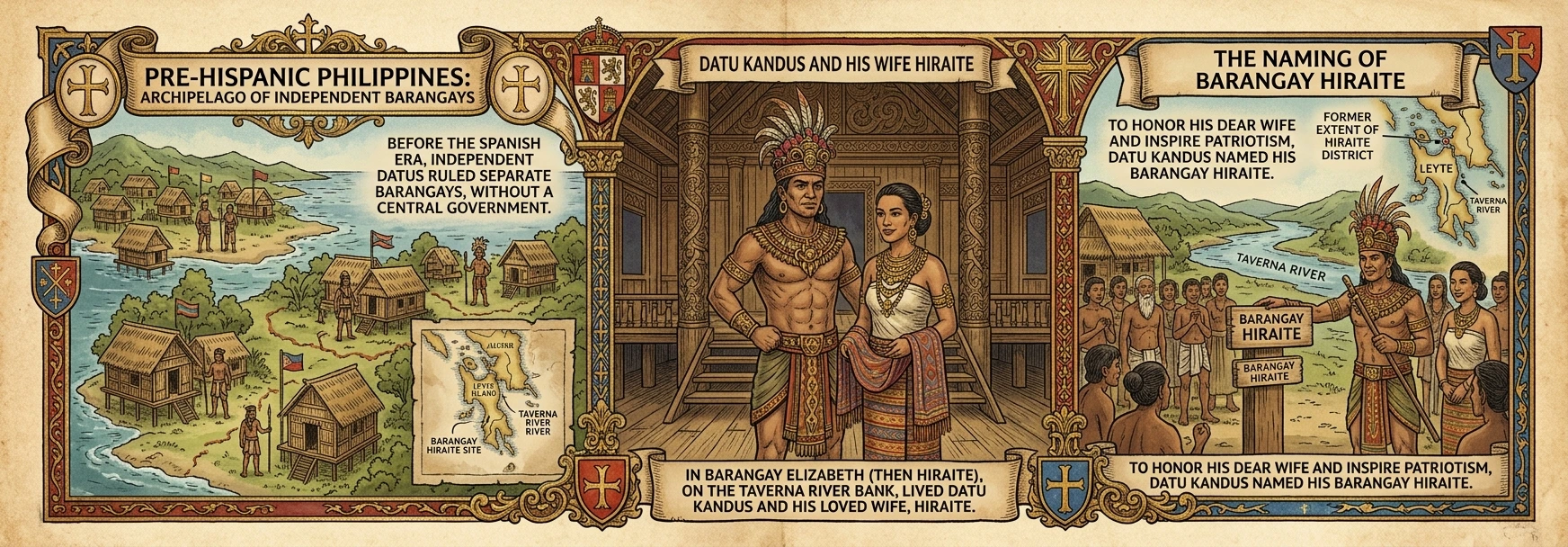
A peaceful village nestled along the southern bank of Taverna River, opposite the site of the present town of Leyte, now called Barangay Elizabeth. In this village lived a brave datu named Datu Kandus. His beautiful wife was Hiraite. The datu loved his wife so dearly, that to perpetuate her name and to instill in his subjects the spirit of patriotism, he named his barangay Hiraite.
The Great Drought
Datu Kandus ruled his people wisely, with the help of his wife. As the years glided along, changes took place. A drought occurred which lasted for more than a year. The great calamity brought havoc and miseries to the inhabitants. Many of Datu Kandus’ subjects died of hunger.
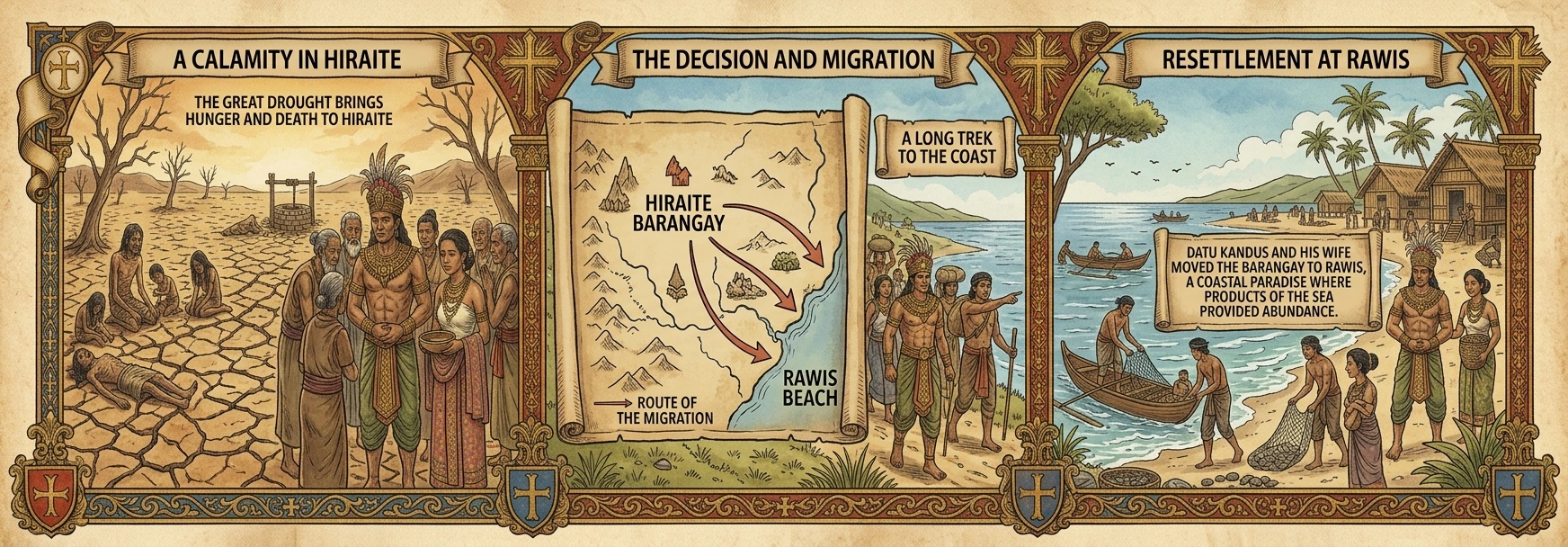
To forestall the suffering of his people, Datu Kandus moved the site of the village to the sea coast, a place now called Rawis. He chose this second site of his barangay because his people could then be relieved of hunger by living on the products of the sea.
The Golden Bell
Many years passed by and the inhabitants lived contentedly. Suddenly, a nation-wide Moro banditry came. At this time, the ruler was a descendant of Datu Kandus. To safeguard the barangay, the people built a cottage up a molave tree near sitio Bontogon and assigned Turoy, a brave warrior, to keep watch.
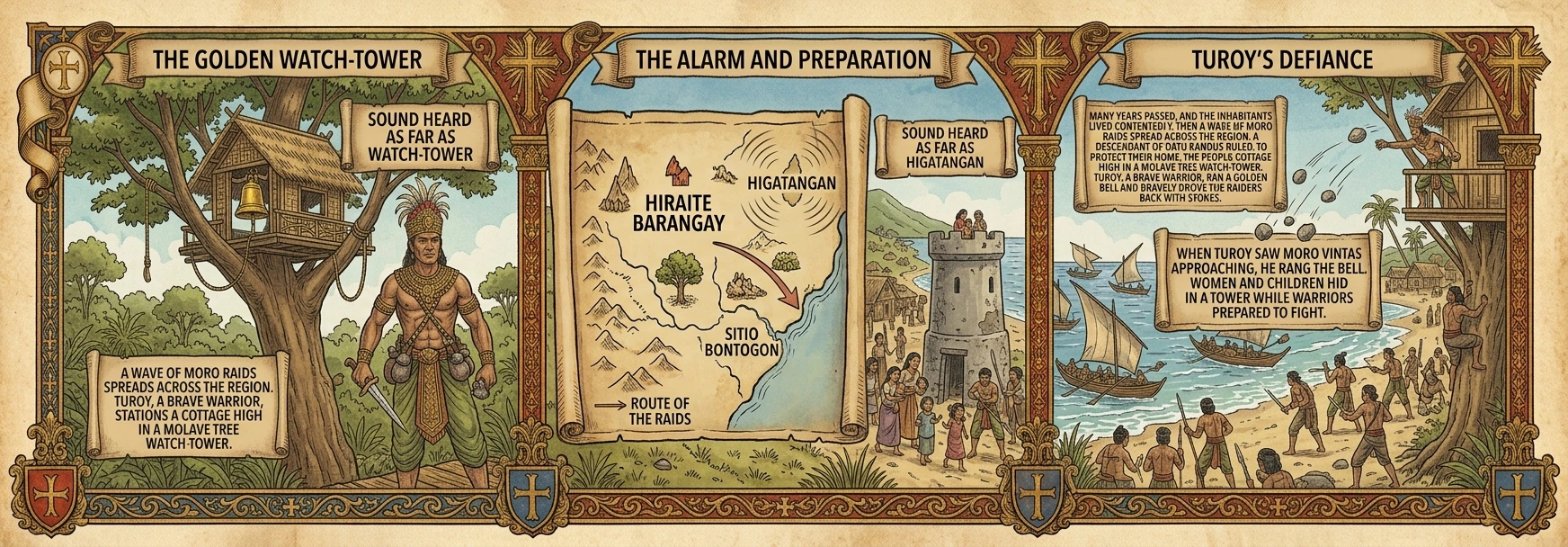
A golden bell, whose sound could be heard in Higatangan, was hung in the molave tree. When Turoy rang the bell upon seeing Moro vintas, women and children were hidden in a concrete tower while warriors prepared for fight. Turoy bravely repelled raiders with stones from his outpost.
Spanish Era & Naming of Leyte
With the advent of Spanish battleships roaming the seas, Moro piracy was temporarily checked and the people of Hiraite had a respite.
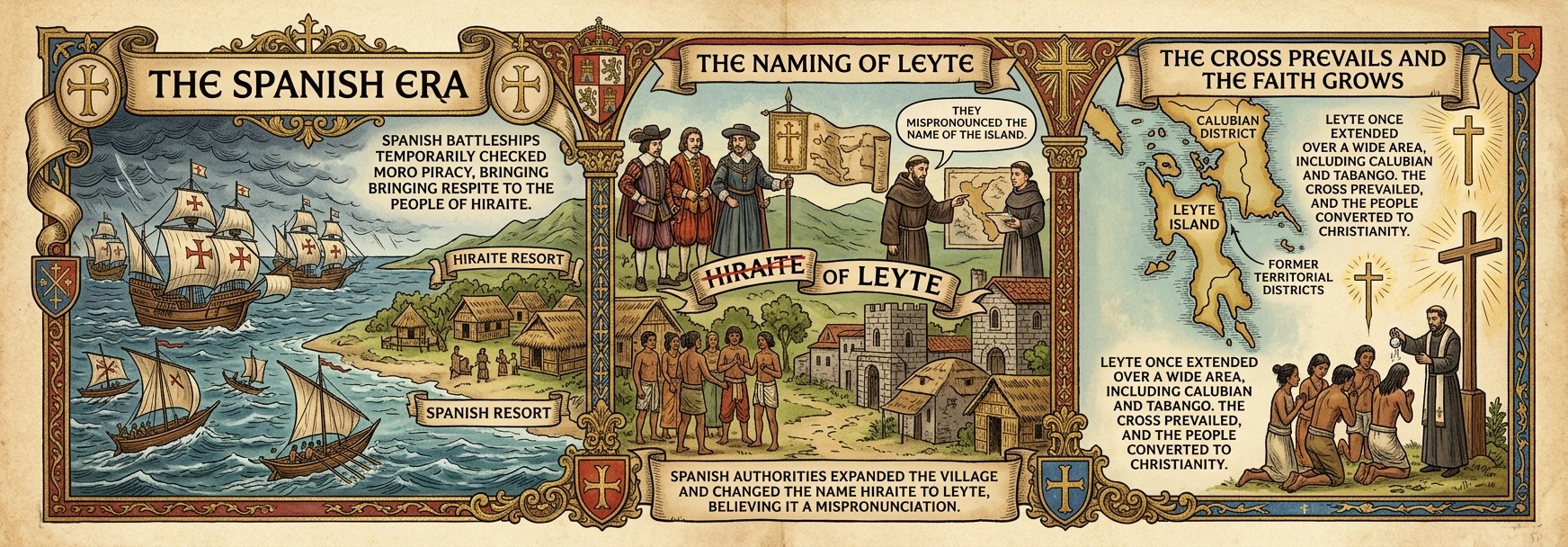
Conscious of the growing population, Spanish authorities expanded the village and changed the name of Hiraite to Leyte, thinking villagers simply mispronounced the name of the island. Leyte extended over a wide area; Calubian and part of Tabango were once territorial districts of Leyte. The cross prevailed and people converted to Christianity.
Historical Relics
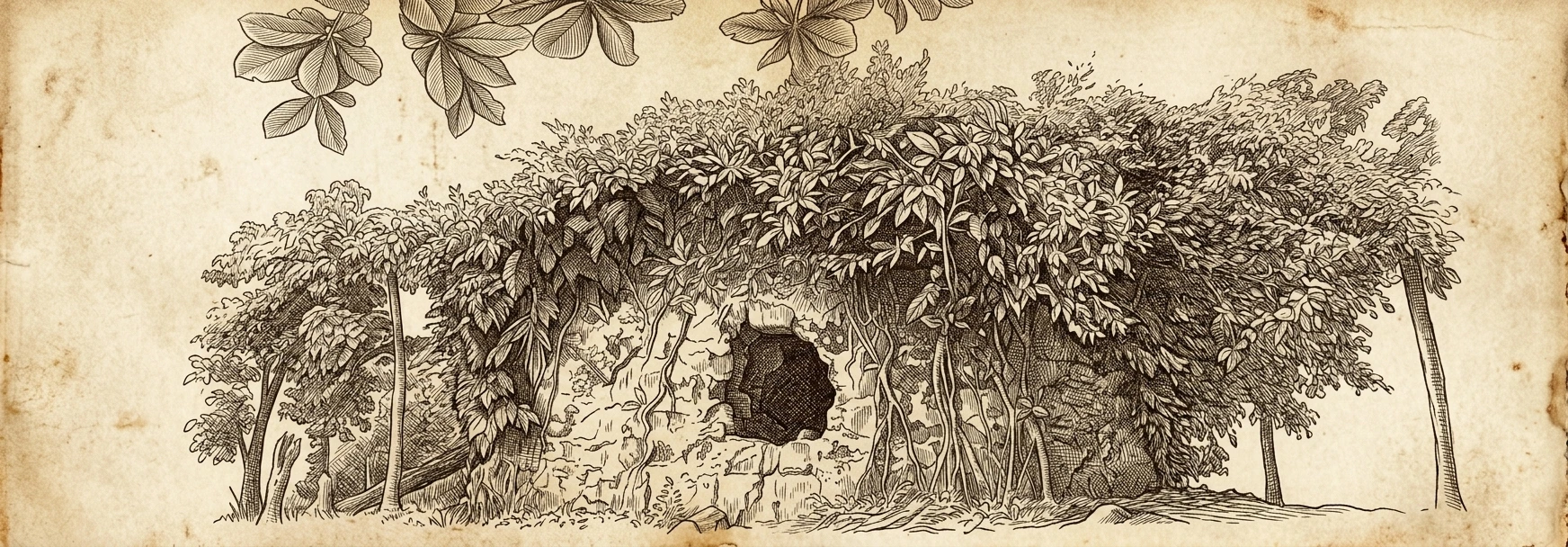
The ruins of the concrete defense tower still exist today at sitio Rawis, Barangay Poblacion—a lasting relic of the remote past of ancient Hiraite.